For the hours after a night shift.

Nightings helps with the drive home, a head still at work, waking after 4 hours and your first day off. Made by an anesthesiologist who works nights.

Free on iPhone · No account

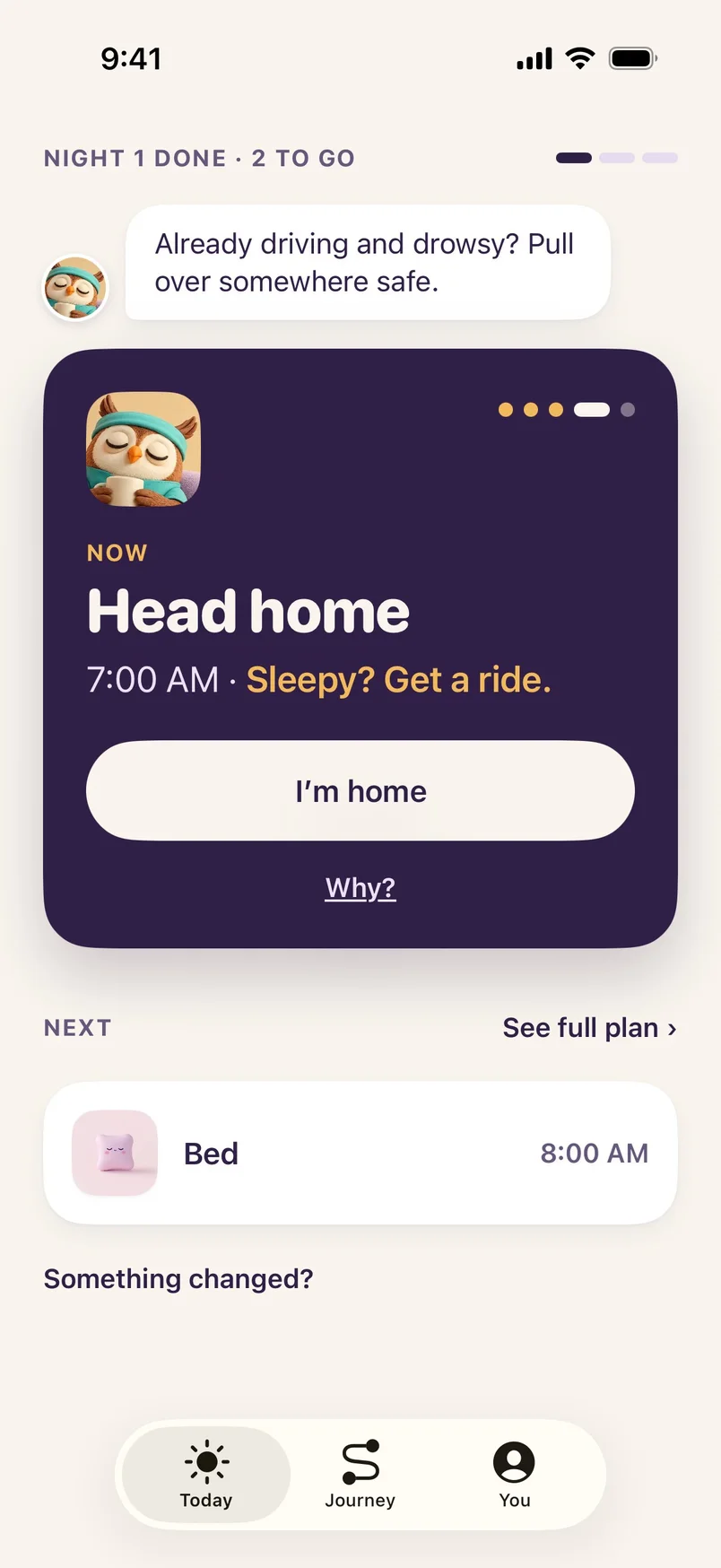
The Nightings Today screen as a night shift ends: Night 1 done, 2 to go. The owl says: Already driving and drowsy? Pull over somewhere safe. The Now card reads Head home, 7:00 AM. Sleepy? Get a ride. Button: I’m home. Next: Bed, 8:00 AM.

How Nightings helps

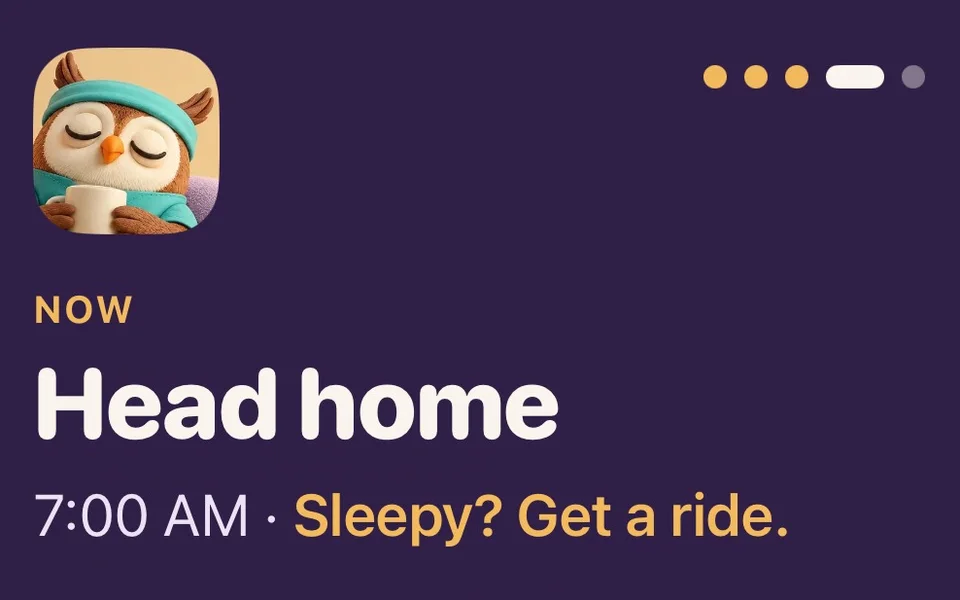
  • The Now card in Nightings: Head home, 7:00 AM. Sleepy? Get a ride.

    Fighting sleep on the drive home?

    Often you can’t, and the radio or an open window won’t fix it. When your shift ends, the app leads with: Sleepy? Get a ride. A free lesson helps you choose a backup ride before you need it.

  • Woke up after 4 hours again?

    During your planned sleep, Nightings sends no reminders. Tap Woke early? for Back to rest, a 3-minute voice to help you settle. A free lesson explains why day sleep breaks early.

  • Lose your first day off to sleep?

    Choose how your days off go. Back to sleeping at night? After your last night, Nightings suggests a short morning sleep, then an early night. Rather keep sleeping in the day? Choose that instead.

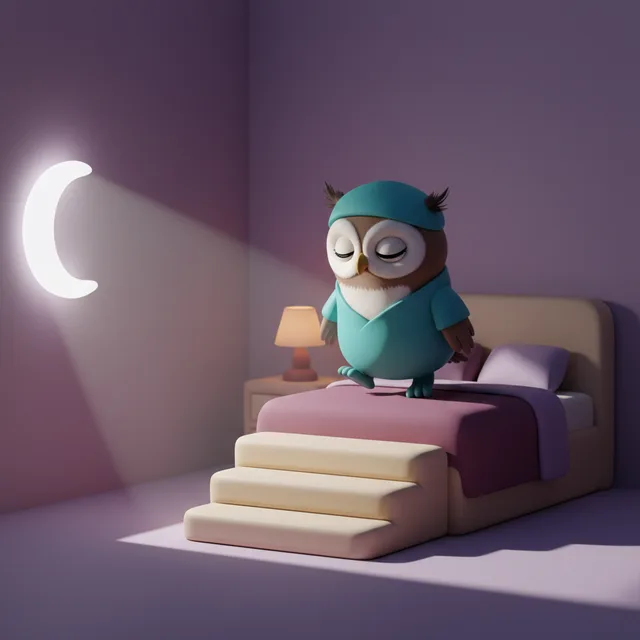
The Nightings owl tucked in with a sleep mask and pillow.

Home, but your head’s still at work?

Wind-downs for walking in at sunrise. Listen once you’re home, never while driving.

After your shift

4 min · Voice and gentle music

  • Woke too earlyBack to rest · 3 min
  • Mind won’t settleBusy mind shuffle · 7 min
  • Body still tenseTense and let go · 11 min
  • Ready to sleepDeep drift · 13 min
Read the transcript

Your shift is over. You have arrived at a place where you can rest. Begin once your journey is finished and you can leave your attention here.

Take a moment to make yourself comfortable. Let your shoulders settle against the bed or chair. Place your hands wherever they feel at ease. If you would like, close your eyes or soften your gaze.

There may still be a sense of movement in you. The pace of the shift. A conversation. A decision you keep revisiting. Give yourself a little space to arrive.

Feel the surface beneath your body. Notice the places where it meets you. Behind your shoulders. Under your hips. Along your legs. Let that support become a little more noticeable.

Your breathing can keep its own comfortable rhythm. Feel one breath arrive, and one breath leave. Then allow the next breath to come in its own time.

For a few moments, simply feel yourself being supported.

Bring your attention to your face. Notice your forehead and the small muscles around your eyes. Let your jaw settle. Your lips can rest gently together, or slightly apart.

Now notice the weight of your arms. From your shoulders to your elbows. From your elbows to your wrists. Let your fingers uncurl a little, if that feels comfortable.

Perhaps your mind brings something from work into this quiet space. You can acknowledge it with a simple phrase. That was part of my day. Then feel the weight of your hands again.

If something needs attention later, you can make a brief note before continuing. Let this be a practical way to give your mind some room.

Return to the contact beneath your body. Let your back settle. Notice the movement of your ribs as you breathe. Allow your abdomen to move naturally.

If focusing on breathing feels uncomfortable, choose another gentle point of attention. The fabric beneath your hand. The temperature of the room. A soft, steady sound.

Now notice your legs. The weight of your thighs. The backs of your knees. Your calves and your heels. You can shift your position until you feel comfortable.

Imagine the pace of your day gradually slowing, like a room becoming quiet after everyone has gone home. A chair settles. A door closes softly. The space grows still.

You can let each thought come and go through that space. There is room for a busy mind and a resting body to be here together.

Spend the next few breaths with the feeling of your body resting. Let your attention travel to whichever part feels most comfortable.

Perhaps your hands feel warm. Perhaps your shoulders feel heavier. Perhaps you simply notice the bed underneath you. Stay with that simple detail for a while.

Your day has taken effort. This time can belong to recovery. Allow your attention to soften around the edges.

As the guidance comes to an end, you can stay exactly where you are. Let the surface hold you. Let your breathing continue in its own way. And give yourself this quiet time to rest.

Free and Pro

Free

$0

Getting home and getting to sleep are free.

  • Drive-home guidance after every night shift
  • Every guided wind-down, including Back to rest
  • Your plan and reminders, with no reminders during your planned sleep
  • Your sleep log, and after 2 or more nights in a row, the sleep you logged next to the plan
  • 3 lessons, including getting home safely

No scores, no streaks, no account. Your sleep log stays on your iPhone.

Join the beta

Pro

$39.99/ year

About $3.33 a month, or $5.99 month to month.

After your nights, keep what helped.

  • After 2 or more nights in a row, keep, change or drop what you tried, with a lesson for your next nights
  • Compare sleep after nights, day shifts and days off
  • Schedule changed? Import the new one
  • All 34 lessons, to read or listen

Nothing is charged during the beta. Cancel anytime in iPhone Settings.

I work nights too.

I’m an anesthesiologist. Most sleep advice assumes you sleep at night. I built Nightings for the hours after a night shift.

— Nightings’ founder

Questions

Can I get Nightings now?

Yes, in beta on iPhone. Email hello@nightings.com and we’ll send a TestFlight invite. Pro goes on sale with the App Store release; nothing is charged during the beta.

Does it plan my sleep?

Yes. Tell it your shifts, and it fits sleep and a nap around them and around can’t-move times like school pickup. If it can’t fit enough sleep, it says what’s in the way.

Is a 10-hour sleep after nights lazy?

No: you’re catching up on sleep you lost over the nights, and that can take more than one sleep. If you’re still wiped out after several days off, mention it to your doctor.

Is this medical advice?

No. Nightings is sleep planning and education for adults. It doesn’t diagnose or treat sleep disorders, and it can’t tell you whether you’re safe to drive or work. If poor sleep goes on for weeks, or you nod off when you don’t mean to, see a doctor.

Where does my data go?

There’s no account. Your shifts, sleep log and notes stay on your iPhone unless you export or share them. Optional cloud reading of a hard-to-read schedule asks you first every time. Details are on our privacy page.

Is there an Android version?

Not yet. Nightings needs an iPhone with iOS 17 or later.

Try it on your next nights.

Nightings is in a small iPhone beta. Email us and we’ll send a TestFlight invite. Nothing is charged during the beta, and every lesson is open while it runs. Needs iOS 17 or later.

Email us for a beta invite

Or write to hello@nightings.com